
Walls Open First When Water Damage Is Suspected
Bathroom remodel in Dickinson for dated fixtures, water-damaged subfloor, or full gut-and-rebuild projects
Bathrooms in older Galveston County homes often hide water damage behind tile or around the tub surround—damage that isn't visible until the wall is opened. A remodel that skips that inspection step will tile over a compromised substrate, and the new tile will fail at the same rate as the old one. Mr. Home Repair remodels bathrooms in Dickinson, from a single fixture update to a complete gut-and-rebuild, with one crew handling tile, plumbing fixtures, vanity, flooring, and drywall from start to finish. The scope is written out before work begins so there are no undefined decisions once demolition starts.
The crew opens walls where needed to inspect the subfloor, framing, and any water damage before tile or fixtures are installed. Damaged subfloor and drywall are replaced at that stage rather than covered over—rot in a subfloor doesn't become less structural just because it's under new tile. Once framing and substrate are confirmed sound, the shower or tub surround is waterproofed before any tile is set, which is the step that determines whether the new installation holds long-term. Fixtures, vanity, and flooring are installed last, in sequence, rather than in whatever order is convenient on a given day.
Request a free estimate to have the bathroom reviewed and receive a flat-rate quote with the full scope written out before any work begins.
Why Sequence Determines Whether a Bathroom Remodel Lasts
The order of operations in a bathroom remodel isn't arbitrary—each phase depends on the previous one being correct. Waterproofing the shower surround before tile goes up is a specific step that's sometimes skipped on rushed jobs, and its absence is what causes grout to crack and water to migrate into the wall cavity behind the tile within a few years. In homes built in Dickinson and Galveston during the 1970s through early 1990s, original tile was often set over moisture-sensitive backer materials that have been compromised by decades of water exposure. Replacing that substrate is a prerequisite, not an optional upgrade.
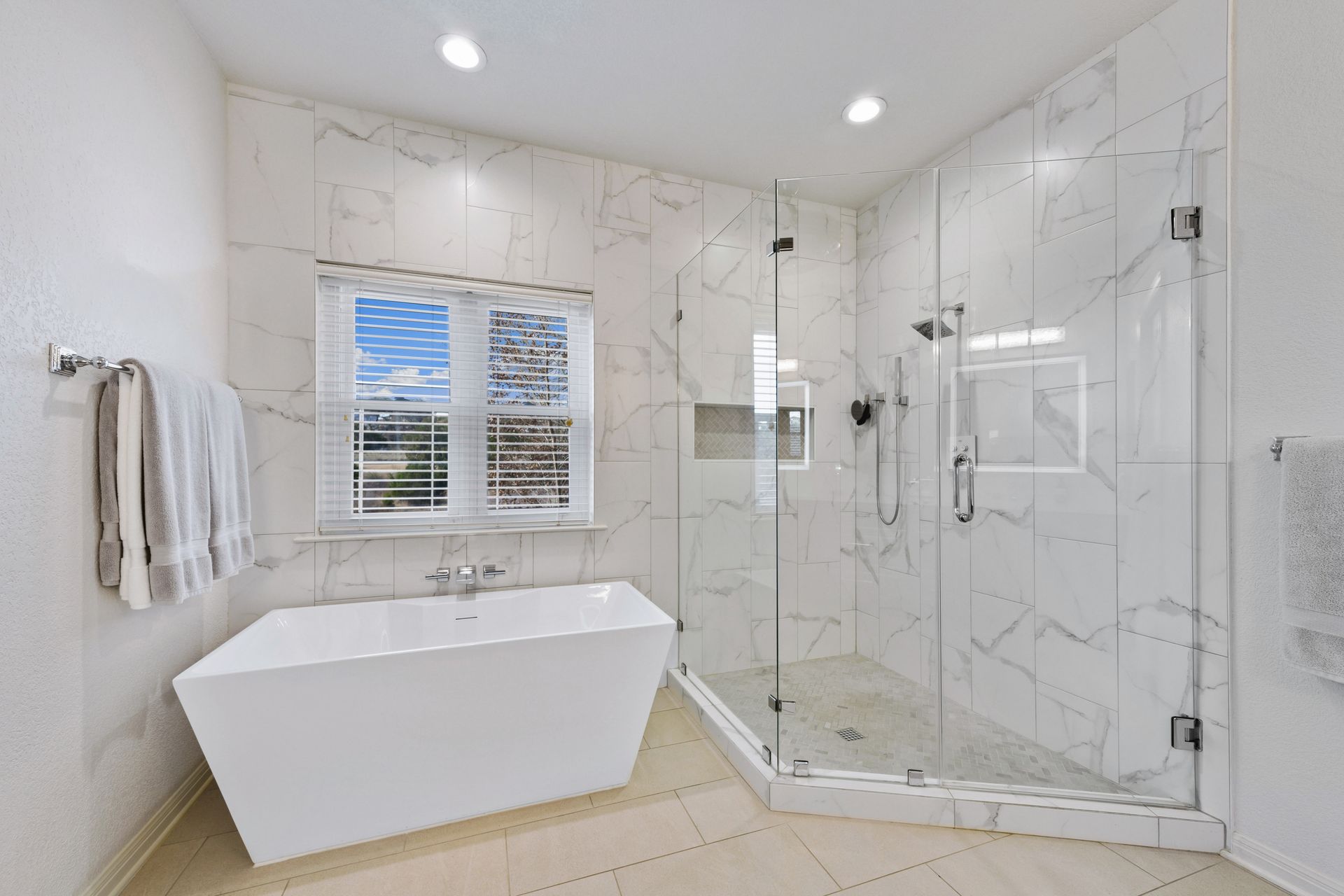
When the remodel is complete, the bathroom should function without any of the conditions that prompted the project: no soft or bouncy subfloor at the tub edge, no loose or lifting tile at the wet zone, and fixtures that are properly set rather than hand-tightened to a compromised supply line. New tile grout lines will be uniform in width and fully filled, with no hollow sound when tapped across the field—hollow tile indicates adhesive failure beneath the surface and is a visible quality indicator worth checking after any tile installation.
Because one crew handles every trade involved in the remodel, decisions made during demolition—like the extent of subfloor replacement or the need for additional blocking behind a new vanity—are handled directly rather than requiring a separate contractor to be scheduled. The flat-rate quote is given after the free estimate, with the scope documented so the customer knows what is and isn't included before work starts.
What Homeowners Ask About Bathroom Remodel Work
These questions address how a bathroom remodel is structured, what the inspection process involves, and what the finished work should look like—particularly relevant for older homes in Dickinson where water damage behind tile is a common finding.
Why are walls opened before tile is installed in older bathrooms?
Water that migrates past grout or caulk over years of use collects in the wall cavity behind the tile and compromises the backer material and framing. Installing new tile over that damage covers it without fixing it, and the new installation will fail at the same weak points the old one did.
What is the purpose of waterproofing the shower surround before tiling?
The waterproofing membrane is what prevents water from reaching the substrate and framing behind the tile surface. Without it, even properly grouted tile allows moisture to migrate through hairline grout cracks over time. Applying the membrane before tile is set is a sequencing requirement, not an add-on step.
How do you identify subfloor damage around the tub or toilet during a remodel?
Once existing flooring is removed, the crew walks and probes the subfloor at the wet zones—around the tub base, at the toilet flange, and at the vanity base. Soft or discolored sections indicate water intrusion, and those boards are replaced before any new flooring or fixture is set.
What does properly installed tile look like once the bathroom remodel is finished?
Grout lines should be consistent in width across the entire tiled surface, fully filled with no voids or low spots, and the tile should produce a solid sound when tapped—not a hollow one, which indicates the adhesive didn't bond correctly beneath that section.
When does a bathroom remodel in Dickinson require replacing drywall rather than just retiling over what's there?
Standard drywall behind a wet zone absorbs moisture over time and loses its structural integrity, so it can no longer hold tile. If the backer material is soft, crumbling, or shows visible mold or staining when the tile is removed, it needs to be cut out and replaced with moisture-resistant backer board before tiling begins.
Mr. Home Repair also remodels bathrooms in League City, Galveston, Texas City, Friendswood, and Tiki Island. Call (409) 392-2177 to schedule a free walkthrough of your bathroom and get a flat-rate quote with a written scope before demolition begins.